Docia Kisseih: The Ghanaian Nurse on Ghana’s Old ¢100 Banknote

Abdullahi Suleiman
04/09/2026
Discover the inspiring story of Dr. Docia Kisseih, the Ghanaian nurse, educator and professional leader whose portrait appeared on the old ¢100 banknote.
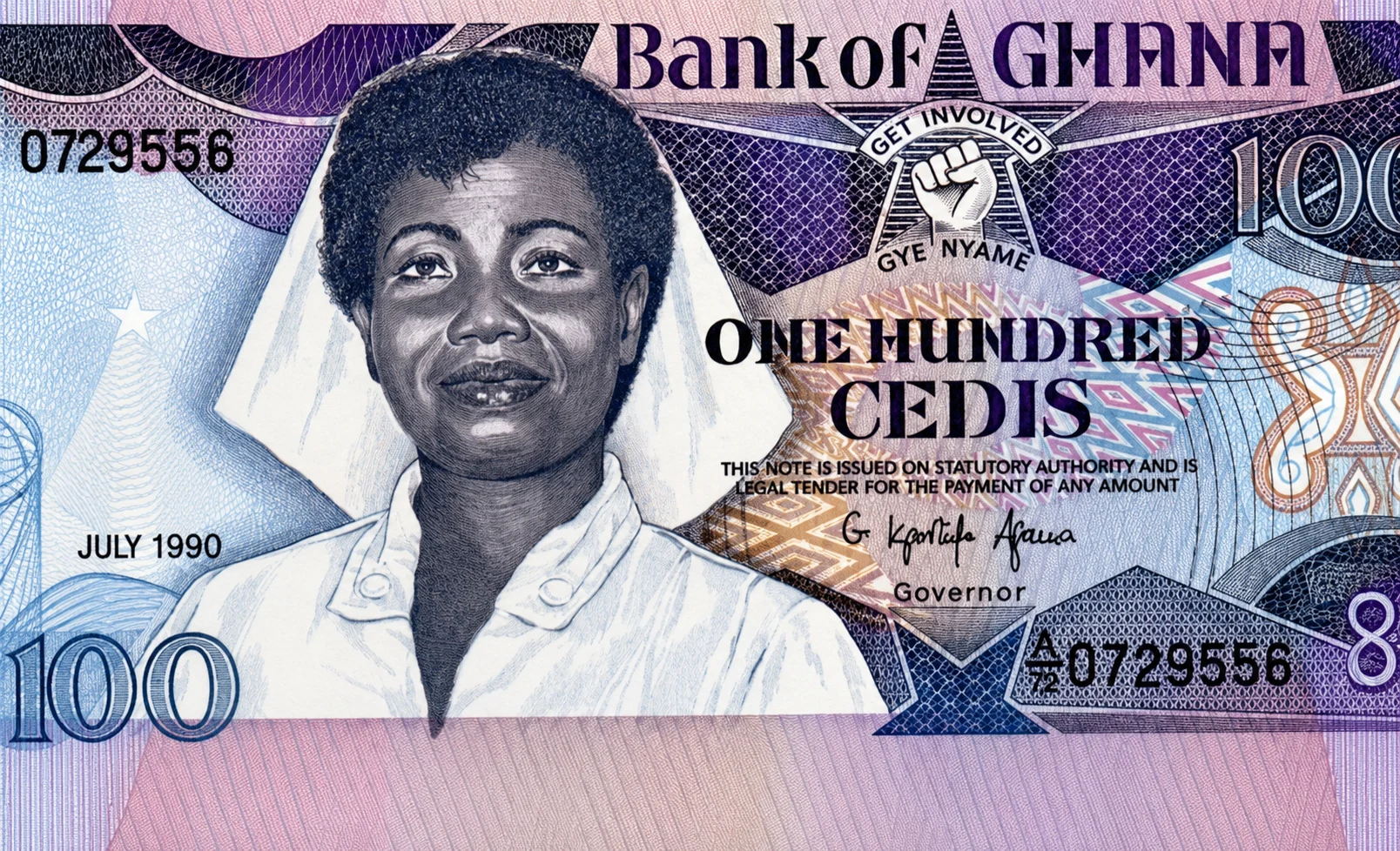
Do You Know the Woman on Ghana’s Old ¢100 Banknote Was a Nurse? Meet Dr. Docia Kisseih
You’ve heard stories of remarkable nurses across Africa. But have you heard about a nurse whose face found its way onto her country’s currency?
Her name was Dr. Docia Angelina Naki Kisseih.
And behind that portrait is the story of a nurse who helped shape the future of modern nursing in Ghana.
A nurse, midwife, educator, administrator and professional leader, Kisseih became the first Ghanaian Chief Nursing Officer after independence. She founded the Ghana Registered Nurses Association, championed higher nursing education and became the first Ghanaian nurse to earn a doctorate.
Her portrait on the ¢100 banknote was remarkable. But it represented only one part of an extraordinary life.
From Following Her Grandmother to Becoming a Nurse
Docia Kisseih was born on 13 August 1919 in Odumase, Manya Krobo, Ghana.
Her introduction to healthcare began through her grandmother, who was a midwife. As a young girl, Docia sometimes accompanied her into communities to deliver babies.
Those experiences influenced her decision to pursue nursing and midwifery at a time when nursing was not always considered an obvious career choice for Ghanaian women.
After attending Presbyterian schools and Achimota School, where she obtained her Cambridge Higher School Certificate in 1938, she enrolled at Korle Bu Maternity Hospital for nursing training in 1940.
By 1943, she had begun her professional career.
But Docia Kisseih would become much more than a nurse caring for individual patients.
She would help shape the profession itself.
Building Ghanaian Nursing After Independence
Ghana gained independence in 1957. Four years later, in 1961, Docia Kisseih became the first Ghanaian Chief Nursing Officer, succeeding the expatriate leadership that had previously occupied the position.
She served until her retirement from the civil service in 1974. At the time, Ghana faced a major challenge: building a strong, self-sustaining healthcare system. Kisseih understood that nurses would be central to that effort.
One of her priorities was nursing education.
In 1963, she helped establish a post-basic nursing programme at the University of Ghana through collaboration between Ghana, the World Health Organization and UNICEF.
The programme provided advanced training in nursing education and administration and attracted nurses from Ghana and other African countries.
She also advocated for public health, community nursing, maternal and child health, and further educational opportunities for nurses at home and abroad.
Her work helped expand nursing beyond bedside care by preparing nurses to teach, administer, lead and influence healthcare policy.
Giving Nurses a Collective Voice
Kisseih also understood that a profession needed a voice.
In 1960, she became the founding president of the Ghana Registered Nurses Association, created through the merger of existing nursing organizations’. She led the association for ten years.
She served on national health and nursing regulatory bodies and represented Ghanaian and African nursing internationally.
From 1973 to 1977, she served as Vice-President of the International Council of Nurses.
Her leadership extended far beyond the hospital. She helped nurses see themselves not merely as workers within a healthcare system, but as professionals capable of shaping it.
And Then, She Became a Student Again
Perhaps the most striking chapter of Kisseih’s story came after she had already achieved so much.
After retiring from the civil service, she joined the University of Ghana’s Department of Nursing as a lecturer in 1975.
By then, she had been the country’s first Ghanaian Chief Nursing Officer, led a national nursing association, influenced nursing education and represented African nursing internationally.
Yet she went back to school.
She pursued doctoral studies at Boston University and became the first Ghanaian nurse to earn a doctorate.
After becoming a national nursing leader, she became a student again. After reaching one major professional achievement, she pursued another.
That may be one of the most important lessons in her story: achievement did not end her education.
A Nurse Honoured by a Nation
In 1984, the Ghanaian state honoured Docia Kisseih for her contribution to the country.
In 1986, her portrait appeared on Ghana’s ¢100 banknote.
But her greatest contribution could not be printed on currency.
It lived in the systems she helped build, the nurses she influenced, the education she championed and the professional structures she established.
In 2008, the University of Ghana awarded her an honorary Doctor of Laws degree in recognition of her contribution to public service. Because of her frailty, the ceremony was held at her home.
She died later that month at the age of 89.
Her legacy continued through the Dr. Docia Kisseih Memorial Lectures, established by the Ghana Registered Nurses and Midwives Association in her honour.
The Legacy Beyond the Banknote
Docia Kisseih’s portrait on Ghana’s old ¢100 banknote may be what first draws people to her story, but it is not what defines her.
She helped shape Ghanaian nursing, strengthen professional leadership, expand access to advanced education and create pathways for other nurses to grow.
Her life offers a model of leadership, lifelong learning and purposeful influence.
Kisseih did not simply rise through the ranks. She used every position she attained to build something larger than herself.
She invested in education, strengthened professional structures, created opportunities for other nurses and represented African nursing beyond her own country.
Most importantly, she never allowed achievement to convince her that she had learned enough.
Leadership is not a destination.
Becoming influential does not mean there is nothing left to learn. Reaching a major milestone does not mean the journey is over. Recognition does not mean the greatest work has already been done.
Docia Kisseih had achieved what many professionals spend their entire careers pursuing, yet she returned to the classroom and continued developing herself.
Her story shows that a career can extend beyond personal excellence into institution-building, mentorship, professional leadership and service.
When a milestone is reached, the more important question may not be, “What else is there for me?”
It should be:
“What more can I do?”
Because hitting a milestone should never be the end of the journey.
There should always be more to learn, more to build and more lives to influence.
References
- Ghana Ministry of Health. (n.d.). Ghana registered nurses and midwives. Ghana Ministry of Health
- Ghana Registered Nurses and Midwives Association. (n.d.). GRNMA brochure. GRNMA brochure
- Modern Ghana. (2019, November 7). Meet the woman on the old 100 banknote. Modern Ghana
- University of Ghana. (n.d.). The evolution of nursing education in a postindependence context—Ghana from 1957 to 1970. University of Ghana Space. University of Ghana research paper
- Docia Kisseih. (n.d.). In Wikipedia.