How to Become a Geriatric Nurse in Africa: A Complete Career Guide

Abdullahi Suleiman
September 4, 2026
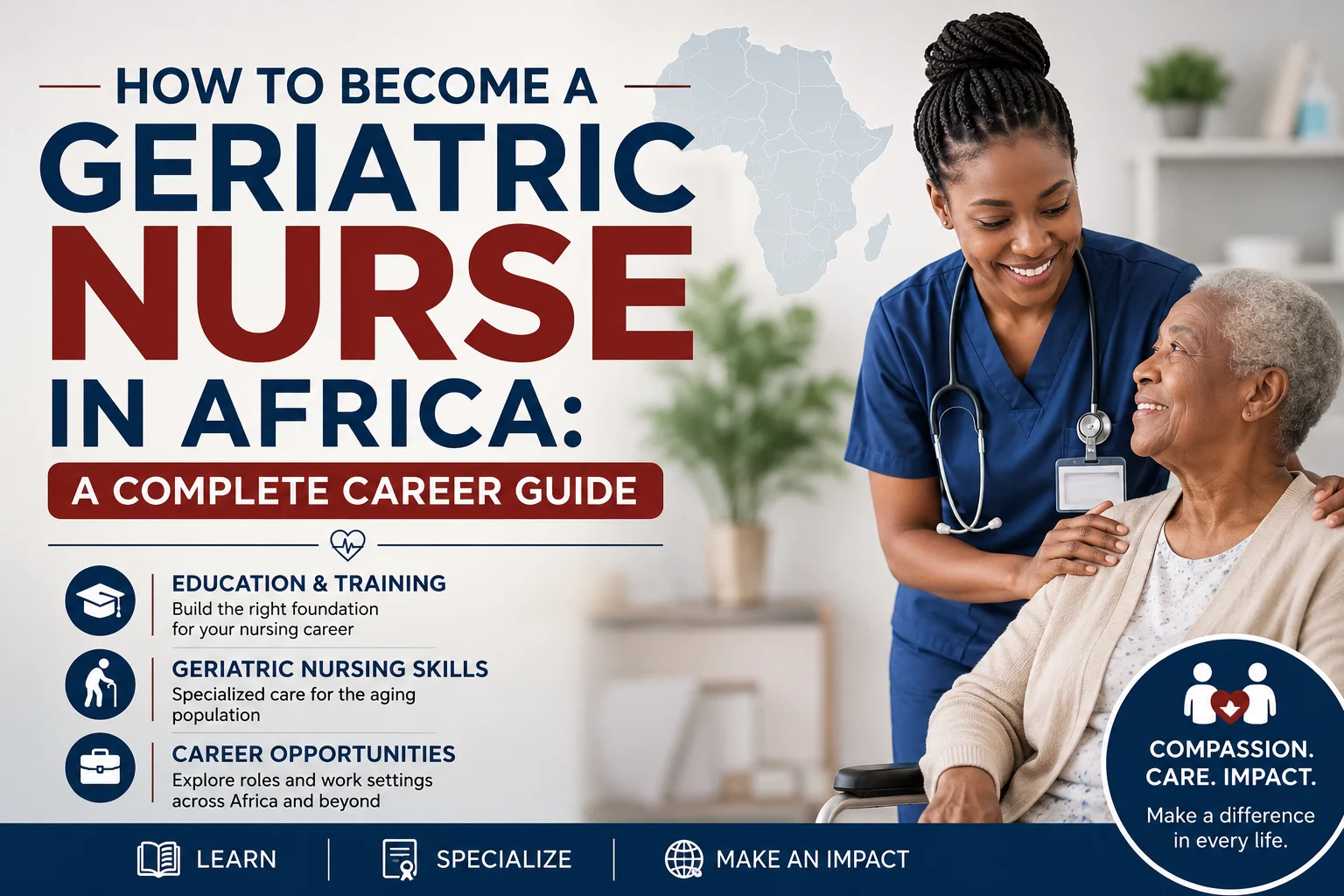
Geriatric nursing is a specialized field of healthcare that focuses on providing care to elderly patients. Geriatric nurses are trained to provide physical, psychological, and social support for older adults who have chronic conditions or disabilities.in this article you will learn how to become a geriatric nurse in Africa? Learn the training path, registration requirements, responsibilities, and where the specialty is heading on the continent.
Geriatric Nurses also help manage the medications and treatments prescribed by physicians for their aging patients. Becoming a geriatric nurse requires an understanding of the unique needs of this population as well as dedication to helping those in need receive quality care.
Geriatric nurses are sometimes known as gerontological nurses. Nurses in this profession, regardless of title, have problems and duties that need compassion, patience, and understanding.
They care for patients who have physical or mental health impairments that make it difficult for them to communicate, care for themselves, recall instructions, or move even short distances safely. Geriatric nurses may be in charge of patients who are at high risk of falling or who are unable to convey pain, hunger, or other requirements vocally.
Table of Contents
What is a Geriatric Nurse?
A geriatric nurse is a registered nurse who specializes in caring for older adults, typically patients facing age-related conditions such as mobility decline, dementia, arthritis, or chronic illness.
In simple terms, they support aging patients in maintaining dignity, comfort, and quality of life. But the role goes far beyond basic care.
A geriatric nurse often becomes a consistent presence in a patient’s recovery or long-term journey, working closely with families, physicians, and care teams to manage both physical and emotional needs.
Universities Offering Geriatric or Gerontological Nursing Training in Africa
Formal, standalone geriatric nursing degrees are still rare in Africa, but a growing number of universities offer postgraduate nursing programmes with a dedicated geriatric, gerontology, or adult-gerontology focus. Confirmed options include:
- University of Ibadan, Nigeria — Offers an Adult-Gerontology Nurse Practitioner track within its Postgraduate College’s advanced nursing practice programmes, alongside other specialisations like Family Nurse Practitioner and Psychiatric-Mental Health Nurse Practitioner.
- University of Nairobi, Kenya — Its Department of Nursing Sciences includes Geriatric Nursing as a recognised specialisation within its Master of Science in Nursing (MSc.N) programme, alongside areas like Oncology Nursing and Community Health Nursing.
- University of KwaZulu-Natal, South Africa — Runs a dedicated Gerontological Nursing postgraduate programme, explicitly positioned to build a centre of excellence in nursing and midwifery education for Africa and beyond.
- University of Ghana — Offers Master’s-level nursing programmes with an Adult-Gerontology Nursing concentration, alongside specialisations such as Family Nursing, Neonatal Nursing, and Women’s Health Nursing.
How to become a geriatric nurse in africa
If you’re interested in becoming a geriatric nurse, there are several steps you should take:
1) Earn your nursing degree –The starting point for any nurse hoping to specialise in geriatrics is the same as for any nursing career: completing an accredited nursing programme. Across Africa, this typically means a nursing diploma or a Bachelor of Science in Nursing (BSc.N) from an institution recognized by your country’s regulatory body, for example, the Nursing and Midwifery Council of Nigeria (NMCN), the Nursing Council of Kenya (NCK), the South African Nursing Council (SANC), or Ghana’s Nursing and Midwifery Council.
Once qualified, registration with your national council is what legally allows you to practise as a nurse — there’s no way around this step, regardless of which specialty you eventually pursue
2) Obtain experience working with elderly populations – If possible try volunteering at hospice centers, assisted living facilities, or other long-term care settings where seniors reside so that when it comes time for job interviews employers will know that you have some relevant experience working with this population already under your belt.
3) Pursue specialty certification – After gaining some work experience within geriatrics many nurses opt to pursue additional certifications such as Certified Gerontological Nurse Practitioner (CGNP), Advanced Practice Registered Nurse/Certified Clinical Specialist in Adult/Gerontological Nursing (APRN/CCS-AGN). These credentials demonstrate knowledge beyond basic RN qualifications which can make one more attractive candidate when applying for positions within this field.
READ ALSO: How to become an Oncology Nurse in Africa
What role does a geriatric nurse do?
Geriatric nurses are in charge of a variety of responsibilities. They do routine Nursing activities such as medicine administration, wound care, treatment, vital sign monitoring, and designing patient care plans.
Notwithstanding, Geriatric nurses have concerns and obligations since they care for the elderly. They must be familiar with frequent conditions among the elderly such as heart failure, diabetes, cancer, arthritis, and lots more.
- Geriatric nurses must be familiar with Monitoring people who may be at risk of falling and devising fall prevention strategies
- Keeping an eye out for changes in patients’ mental health that might indicate despair or isolation.
- Ensure the safety and well-being of Alzheimer’s and dementia patients.
- Checking on patients who are unable to express their needs to ensure they are clean, safe, and not in pain
- informing family members of patients’ progress and frequent conditions that affect elderly people
Where do they work?
Geriatric nurses can find work in a variety of settings, including hospitals and nursing care institutions. They could also work in Assisted living residences, Retirement homes, and Mental health facilities.
Salary earned by geriatric nurses
Being a trained geriatrics nurse offers both job satisfaction and the possibility of financial reward, making it a realistic alternative for individuals wishing to enter the healthcare business. The increasing demand is partly due to higher life expectancies across all demographics and greater knowledge about the significance of effective elder health management.
FAQs: Building a Career in Geriatric Nursing
1. What qualifications do I need to become a geriatric nurse in Africa? You need an accredited nursing diploma or BSc in Nursing, followed by registration with your country’s nursing council. From there, gaining experience with elderly patients and pursuing postgraduate specialisation — where available — helps build genuine geriatric nursing expertise.
2. Is there a formal geriatric nursing certification in Africa? Not in most countries, at least not yet. Standardised gerontology certification remains uncommon across the continent, though universities like the University of Ibadan, University of Ghana, and University of Nairobi offer postgraduate nursing tracks with a geriatric or adult-gerontology focus.
3. Where do geriatric nurses in Africa typically work? Hospitals, nursing homes, hospices, assisted living facilities, and mental health facilities all employ geriatric nurses — alongside home-based and community health settings, which remain especially important given how much elder care in Africa still happens within extended families.
4. What skills matter most for a geriatric nurse? Patience, strong communication, careful observation, and emotional resilience matter as much as clinical skill, since many geriatric patients struggle to communicate their needs directly.
5. How much do geriatric nurses earn in Africa? There’s no standardised geriatric nursing pay scale across most African countries — pay generally follows standard nursing salary structures by country and sector, so it’s worth checking your national Ministry of Health scale directly.
READ ALSO: Career Progression in Nursing
In conclusion
learn how to become a geriatric nurse in Africa today means building the specialty largely through experience and self-directed postgraduate study, rather than following one standardized national pathway. Nursing attracts those who are sensitive, empathic, and caring. Geriatric nursing requires a high level of patience, strong communication skills, and the capacity to remain calm in stressful situations. You’ll also need to be resilient because as a geriatric nurse, you’ll likely witness many patients deteriorate and die.