Nurses Who Are Changing Africa: The People Behind the Impact

Africannurses
August 30, 2026
When you talk about nursing in Africa, the conversation usually turns to migration, staff shortages, and burnout. These concerns are real, but they do not tell the whole story. Across Africa and in the diaspora, nurses are actively reshaping how care is delivered, taught, and trusted, often without receiving the same attention as the challenges they are helping to solve.
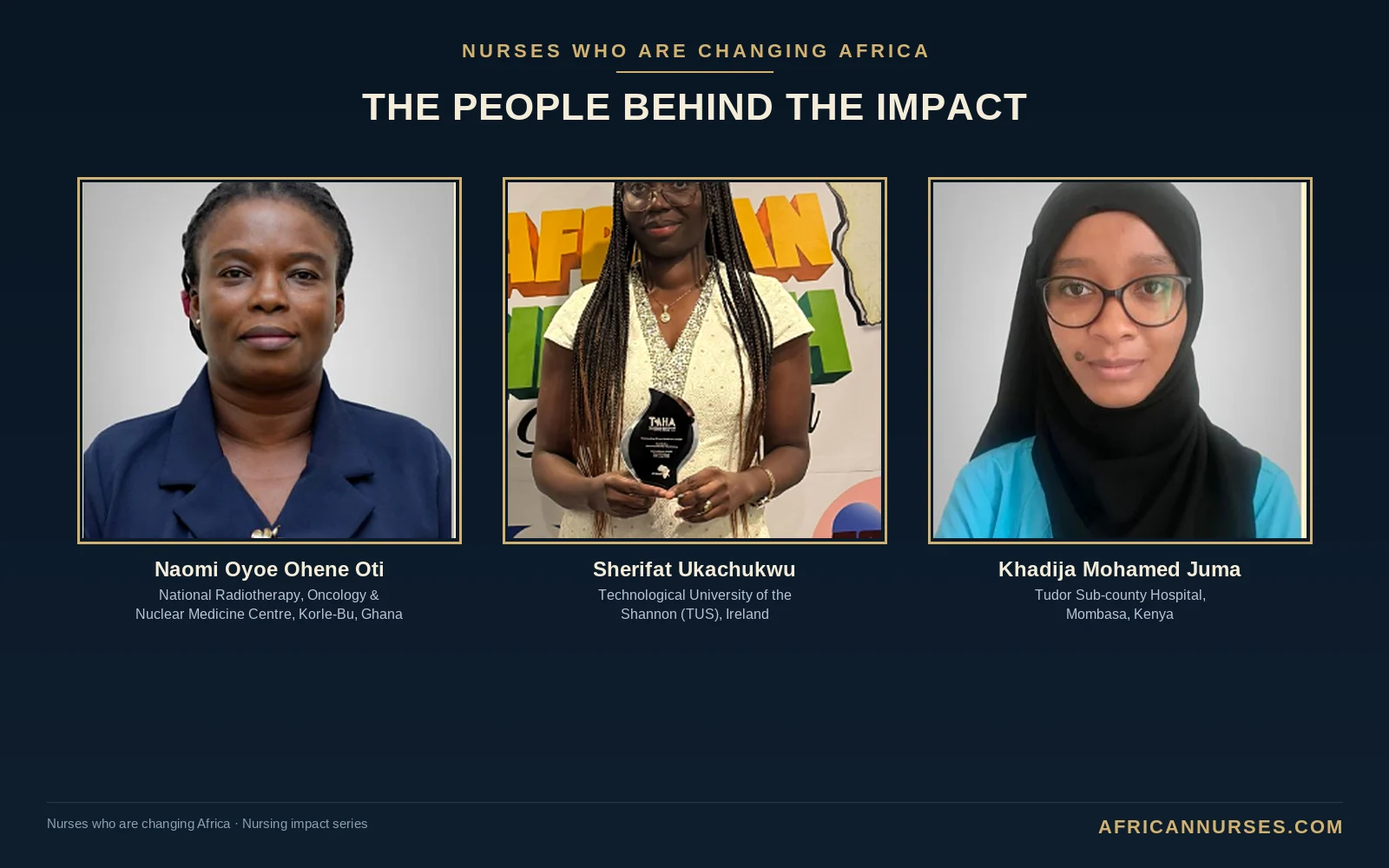
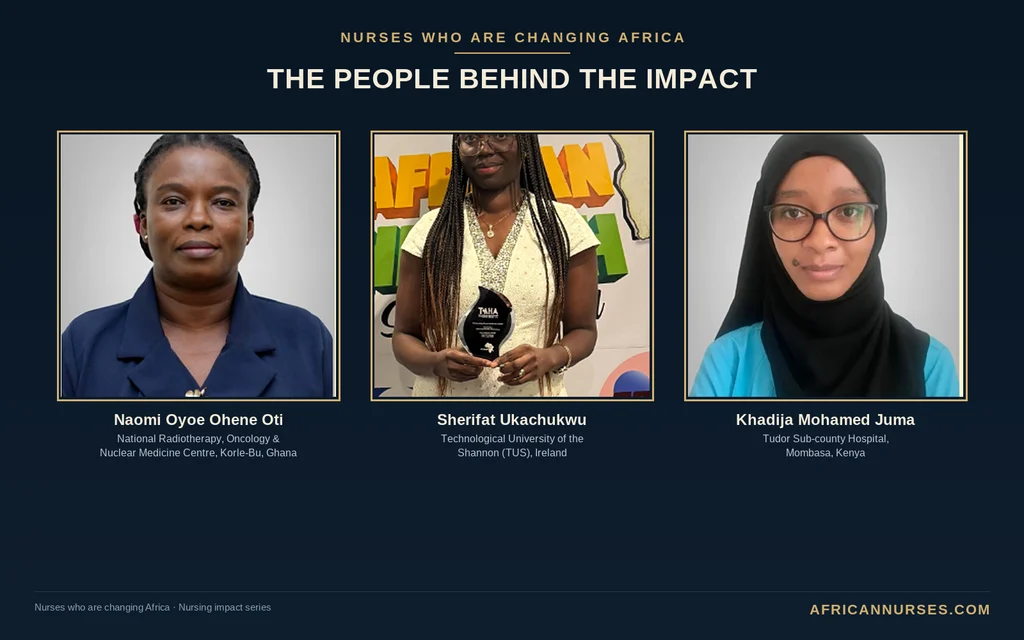
This piece looks at four nurses who are changing Africa across different countries and areas of nursing, from cancer care and blood donation to nurse education and maternal health.
Table of Contents
Nurses Who Are Changing Africa
The four nurses presented in this article span across oncology leadership in Ghana, grassroots innovation in Kenya, cross-border nurse education from Ireland, and quiet frontline maternal care in Lagos, Nigeria.
None of them fit a single template for what “changing Africa” looks like. Instead, they are improving lives in different areas of nursing through expertise, initiative, leadership, and persistence.
1. Nr. Naomi Ohene Oti: Redefining Cancer Care in Ghana
In May 2025, Naomi Oyoe Ohene Oti became the first Ghanaian to win the Aster Guardians Global Nursing Award, one of nursing’s most significant international recognitions, with a $250,000 prize. She was selected from more than 100,000 applicants across 199 countries.
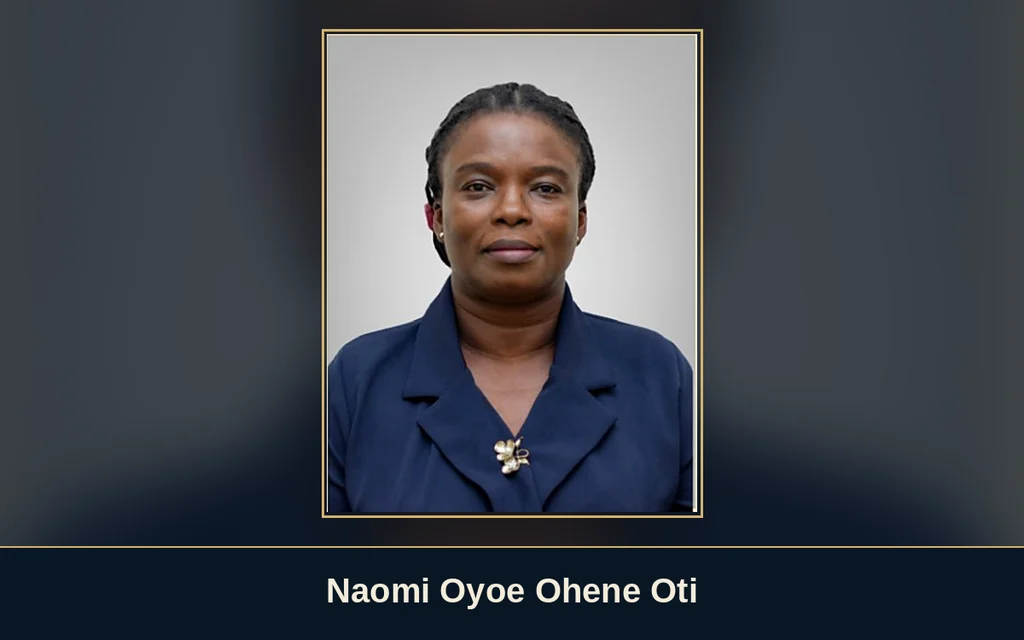
The award recognised more than a single achievement. It reflected her broader contribution to cancer care, oncology nursing education, and health-system improvement in Ghana and across Africa.
Nr. Naomi is an Oncology Nurse Specialist and Head of Nursing at the National Radiotherapy, Oncology and Nuclear Medicine Centre at Korle-Bu Teaching Hospital in Accra, where she has worked for over 23 years. In 2015, she was part of the team that developed Ghana’s first postgraduate oncology nursing curriculum, and she has since mentored more than 60 oncology nurse specialists and 10 breast care nurses.
Her influence extends well beyond Ghana. For instance, she serves on the education and training committee of the African Organisation for Research and Training in Cancer (AORTIC), is a co-investigator on a Global Bridges Oncology grant, and works with international bodies including the American Society of Clinical Oncology (ASCO) and the International Society of Nurses in Cancer Care (ISNCC).
On accepting the award, she said, “For over two decades, I’ve witnessed the inequities in cancer care firsthand and dedicated myself to closing these gaps through training, outreach, and system-level change. This award will help amplify our impact – scaling training, building faculty, and inspiring the next generation of oncology nurses across Africa.”
2. Khadija Mohamed Juma: The Kenyan Nurse Who Turned Grief Into a Blood-Donation Movement
Nr. Khadija Mohamed Juma was one of the ten global finalists for the same 2025 Aster Guardians Award, and her story started with personal loss. She works as a nurse at Tudor Sub-county Hospital in Mombasa, Kenya. She founded RedSplash after her friend’s mother died because a blood transfusion came too late.
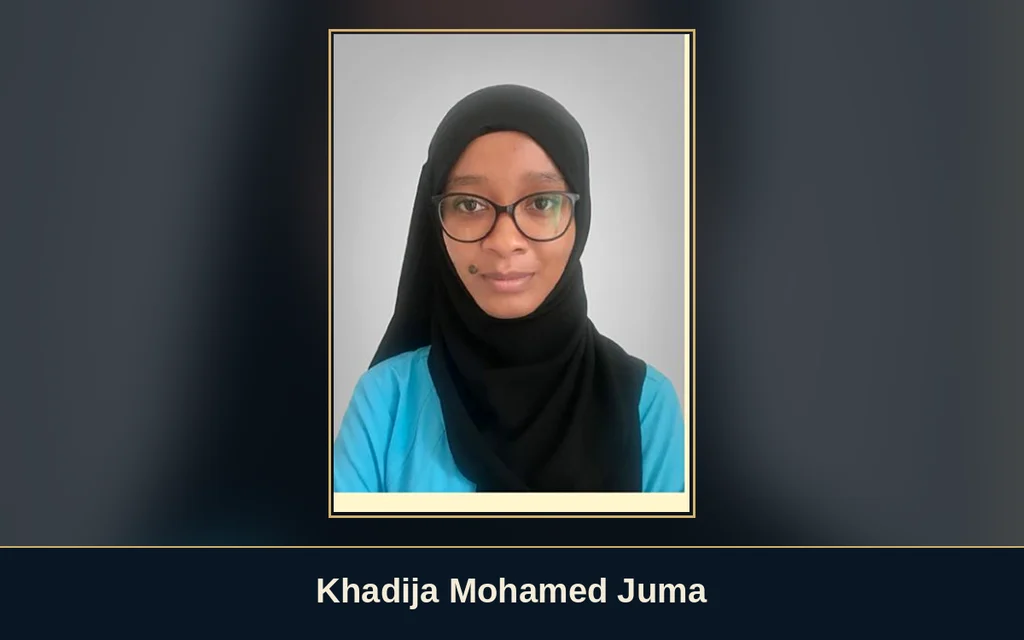
Khadija’s RedSplash uses a Smart Donor Search algorithm to connect blood donors with patients in real time. Under her leadership, the initiative has run more than 500 donation drives, collected over 25,000 units of blood, and is estimated to have helped save around 75,000 lives.
She has mobilised schools, mosques, and entire communities, working to break myths around voluntary donation. She describes the mission as ” to deliver blood faster than pizza.” She’s now working toward Kenya’s first RedSplash Blood Bank and mobile donation units.
Read Also: First Black Nurse to Work in UK: The Story of Chief Kofoworola Abeni Pratt
3. Sherifat Ukachukwu: Building Nurse Educators Across Borders
Sherifat Ukachukwu is a Nigerian-born nurse now based in Ballinasloe, Ireland. She received the Outstanding African Healthcare Leader Award at the African Health Summit Ireland 2026 in July 2026. She currently works as Clinical Skills Learning Coordinator at the Technological University of the Shannon (TUS).
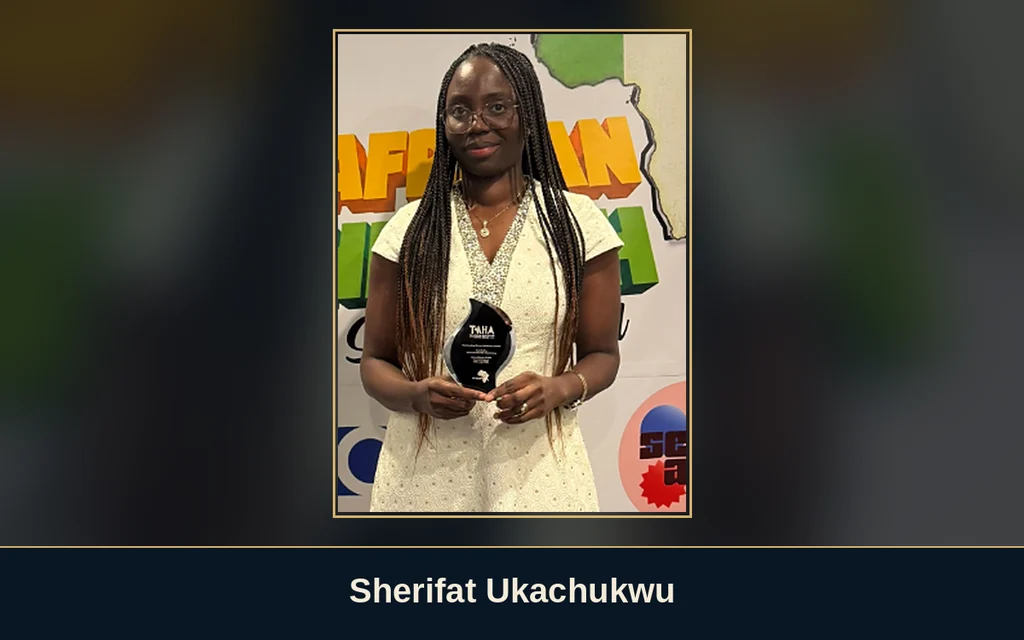
The award recognised her sustained contribution to healthcare education, professional development, and international collaboration. At the summit, she served as lead facilitator for a “World Café” session, bringing healthcare professionals from different backgrounds together to discuss challenges including workforce sustainability, leadership development, equitable healthcare access, and international collaboration.
Her story reminds us that “changing Africa” isn’t confined to the continent itself; it also happens through diaspora nurses training the next generation of healthcare leaders abroad while staying connected to home.
4. Solademi Idowu: The Quiet Frontline Work Saving Mothers in Lagos
Not every nurse changing Africa wins an international award, and Nr. Solademi Idowu’s story matters precisely because of that. She is a registered nurse and midwife at Lagos Island Maternity Hospital who has helped implement the E-MOTIVE postpartum haemorrhage (PPH) bundle.
The E-MOTIVE approach combines objective early detection of postpartum haemorrhage with a coordinated first-response treatment bundle, with treatment components ideally initiated within 15 minutes of detection.
Before the implementation of E-MOTIVE, blood loss at her facility was estimated visually; now detection is structured and data-driven. According to Nr. Solademi, the E-MOTIVE initiative has improved how her facility detects and responds to postpartum haemorrhage. Since its adoption, Lagos Island Maternity Hospital has not recorded a PPH-related death.
How to Apply for the Aster Guardians Global Nursing Award
Naomi Ohene Oti’s win is a reminder that this award is genuinely open to nurses worldwide, not just a small circle of insiders. Here’s how the application process generally works:
- Register on the official platform. Applications are submitted at apply.asterguardians.com — the only official channel. There is no application fee.
- Check the eligibility criteria. You must be a currently practising registered nurse (registered midwives cannot apply), meet a minimum years-of-experience requirement, and hold valid identity, residency, and nursing licence documents as of the stated cutoff date for that year’s cycle.
- Choose your areas of contribution. Applicants select one Primary and up to two optional Secondary areas from: Patient Care, Nursing Leadership, Nursing Education, Social or Community Service, or Research, Innovation & Entrepreneurship in Healthcare.
- Complete a case study for each area selected. You’ll need to describe your impact in detail — the organisers recommend backing your story with concrete data or outcome numbers, since these tend to resonate more strongly with the jury than general descriptions.
- Provide a reference. The form requires a referrer’s name, designation, organisation, and contact details.
- Save your progress regularly — the online form can time out, and unsaved work may be lost.
- Submit before the deadline. Recent cycles have closed applications between November and January, with the Top 10 finalists announced ahead of a ceremony held around International Nurses Day (12 May) each year.
Applications for the 2026 edition closed in January 2026, and that year’s ceremony has already taken place. If you’re a nurse considering applying, the practical next step is to check apply.asterguardians.com directly for when the next cycle opens, rather than relying on a specific date here, since timelines can shift from year to year.
What These Four Nurses Have in Common
Look past the different countries and career stages mentioned here, and a pattern emerges among these nurses who are changing Africa. First, each of them identified a specific gap, from inadequate oncology training and delayed blood transfusions to gaps in nurse education and unstructured PPH detection, and drove a concrete response rather than waiting for a system-wide fix.
Secondly, they did not work alone. Each of them leaned on institutions, communities, or international partners to scale their impact beyond what one person could do on their own.
Third, their work went beyond ideas or intentions. It produced measurable outcomes, whether it was a curriculum, a blood bank, a leadership framework, or a hospital’s death rate.
Lastly, there is also a shared honesty in how these nurses talk about their work. None of the four frame their achievements as finished projects. Naomi describes her award as fuel to scale training further, not a conclusion. Idowu acknowledges the bed-space pressure her team still works under even after eliminating PPH deaths at her facility.
Together, these four stories suggest that nurses do not need perfect conditions to create meaningful change. They need to recognise a real problem, build practical responses, work with others, and follow through.
How You Can Start Making Your Own Impact
As a registered nurse, you do not need an international award to start your own journey. Begin with the gap you see most clearly in your own unit or community. It could be the delay in accessing care, the missing protocol, or the issues patients complain about the most.
Ask what a small, concrete first step would look like. Document what you try, even if it was informal. Connect with a professional body or association in your specialty, the way Naomi works through AORTIC and Ukachukwu works through international summits. And don’t wait for permission to start small. Remember that RedSplash began as one nurse responding to one loss, not a funded programme.
If you’re earlier in your career, mentorship counts too. Naomi didn’t just win an award for her own clinical skill. She helped build a curriculum and mentored more than 60 oncology nurse specialists, meaning her impact now extends beyond any single shift she works. That’s a model any nurse can apply on a smaller scale. It could be the colleague you show a better technique to, or the student you take time to explain something properly to. All these efforts are part of the same chain of change these four nurses represent.
Related: From the Ward to the Marketplace: The Nurse Selling Cooked Eggs to Build Her Dream
FAQs About Nurses Who Are Changing Africa
1. Who are some of these nurses right now? Notable examples include Naomi Ohene Oti (oncology leadership in Ghana), Khadija Mohamed Juma (blood-donation innovation in Kenya), Sherifat Ukachukwu (nurse education from Ireland), and Solademi Idowu (maternal care in Lagos, Nigeria).
2. What is the Aster Guardians Global Nursing Award? It’s one of nursing’s most significant international recognitions, awarding a $250,000 prize to nurses making an exceptional global impact. Naomi Ohene Oti won it in 2025, becoming the first Ghanaian to do so.
3. What is RedSplash? RedSplash is a blood-donation initiative founded by Kenyan nurse Khadija Mohamed Juma, using a Smart Donor Search algorithm to connect donors with patients needing transfusions in real time.
4. Do you need an award to be a nurse changing Africa? No. As Solademi Idowu’s story shows, meaningful, life-saving change often happens quietly at the frontline, without international recognition.
5. How do I apply for the Aster Guardians Global Nursing Award? Applications are submitted for free at apply.asterguardians.com. You’ll need to meet eligibility requirements as a currently practising registered nurse, select your area(s) of contribution, and complete a detailed case study of your impact. Check the official site for current cycle dates, since deadlines shift each year.
Conclusion
Nurses who are changing Africa aren’t a rare exception to an otherwise difficult profession. They are proof of what’s possible within it, even under real strain. Naomi Ohene Oti, Khadija Mohamed Juma, Sherifat Ukachukwu, and Solademi Idowu didn’t wait for perfect conditions. They worked with what they had, built what was missing, and measured what changed. Whatever stage you’re at in your nursing career, their stories point to the same starting point: notice the gap in front of you and do something about it.


