
Sickle Cell Disease in Africa: Symptoms, Complications, and How Nurses Are Fighting Back

Africannurses
14/08/2026
Every year, an estimated 240,000 children are born with sickle cell disease across Africa, and without proper care, many will not live to see their fifth birthday. That single statistic explains why sickle cell disease remains one of the continent’s most urgent, yet most overlooked, public health challenges. This article breaks down what sickle cell disease in Africa, why it hits Africa so hard, the symptoms every parent and nurse should recognize, and the treatment approaches recommended by the World Health Organization.
Table of Contents
- 𝗪𝗵𝗮𝘁 𝗶𝘀 𝗦𝗶𝗰𝗸𝗹𝗲 C𝗲𝗹𝗹 𝗗𝗶𝘀𝗲𝗮𝘀𝗲?
- 𝗦𝗶𝗰𝗸𝗹𝗲 C𝗲𝗹𝗹 𝗗𝗶𝘀𝗲𝗮𝘀𝗲 𝗶𝗻 𝗔𝗳𝗿𝗶𝗰𝗮
- C𝗼𝗺𝗽𝗹𝗶𝗰𝗮𝘁𝗶𝗼𝗻𝘀
- How Nurses Manage Sickle Cell Disease
- 𝗡𝘂𝗿𝘀𝗶𝗻𝗴 𝗠𝗮𝗻𝗮𝗴𝗲𝗺𝗲𝗻𝘁 of Sickle Cell Disease
- 𝗠𝗲𝗱𝗶𝗰𝗮𝗹 𝗠𝗮𝗻𝗮𝗴𝗲𝗺𝗲𝗻𝘁 of Sickle Cell Disease
- 𝗪𝗛𝗢 𝗥𝗲𝗰𝗼𝗺𝗺𝗲𝗻𝗱𝗮𝘁𝗶𝗼𝗻
- Preventing Infections: Practical Steps That Save Lives
- 𝗣𝗮𝘁𝗶𝗲𝗻𝘁 and Family 𝗘𝗱𝘂𝗰𝗮𝘁𝗶𝗼𝗻
- C𝗼𝗻𝗰𝗹𝘂𝘀𝗶𝗼𝗻
- Frequently Asked Questions
𝗪𝗵𝗮𝘁 𝗶𝘀 𝗦𝗶𝗰𝗸𝗹𝗲 C𝗲𝗹𝗹 𝗗𝗶𝘀𝗲𝗮𝘀𝗲?
Sickle cell disease is an inherited blood disorder caused by changes in the HBB gene, which causes the body to produce faulty hemoglobin. This changes the shape of red blood cells from round to a rigid, crescent or ‘half-moon’ shape.[1]
Sickle cell disease is not contagious, it is passed down through parents’ genes, not spread from person to person.[1]
Sickled cells break down faster than normal (a process called hemolysis), resulting in a constant shortage of healthy red blood cells. This means the body’s tissues and organs often don’t receive enough oxygen. The rigid, sickle-shaped cells also become stuck in smaller blood vessels, which is the main cause of the severe pain associated with the disease. Because it affects the entire body, symptoms and severity vary from person to person.[1]
Symptoms typically begin within the first year of life, often around five to six months of age, and sickle cell disease remains a leading cause of preventable death among children under five, making early recognition and understanding critical to improving outcomes for both individuals and communities.[1]
𝗦𝗶𝗰𝗸𝗹𝗲 C𝗲𝗹𝗹 𝗗𝗶𝘀𝗲𝗮𝘀𝗲 𝗶𝗻 𝗔𝗳𝗿𝗶𝗰𝗮
Sickle cell disease (SCD) is common in many parts of Africa, particularly in sub-Saharan Africa. It is more prevalent in parts of Africa where malaria is widespread. This is because individuals with sickle cell trait have some protection against severe malaria cases and are more likely to survive it. It should however be noted that sickle-cell trait should not be confused with sickle cell disease, as people with Sickle cell disease do not have the same protective effect.[1]
Sub-Saharan Africa carries a substantial proportion of the global SCD burden. According to the World Health Organization (WHO), an estimated 515,000 babies were born with SCD globally in 2021, and nearly 80% of these births occurred in Sub-Saharan Africa.[1]
Looking specifically at the statistics of births in Africa, The WHO Regional Office for Africa estimates that approximately 240,000 children are born with SCD in Africa each year. Without proper resources and adequate care, many of the affected children may die before the age of five.[2]
Population growth is expected to contribute to an increase in the number of children born with the sickle cell disease. Early identification can help prevent complications and improve the quality and length of life of people living with SCD.[1,2]
Read also: Nursing Diagnosis for low hemoglobin
𝗦𝗶𝗴𝗻𝘀 𝗮𝗻𝗱 𝗦𝘆𝗺𝗽𝘁𝗼𝗺𝘀 of Sickle Cell Disease
Pain episodes: sudden, severe pain caused by blockage of small blood vessels by sickled red blood cells.[1]
Anaemia: caused by the early destruction of sickled red blood cells, leading to fatigue and weakness.[1]
Swelling: particularly of the hands and feet, especially in young children.[1]
Frequent infections: damage to the spleen can make individuals with SCD more susceptible to certain infections, including pneumonia.[1,4]
Delayed growth: children with SCD may experience delayed growth and puberty.[1] Vision problems: damage to the blood vessels supplying the eyes can affect vision.[1]
Jaundice: yellowing of the skin and the whites of the eyes due to red blood cell breakdown.[1]
C𝗼𝗺𝗽𝗹𝗶𝗰𝗮𝘁𝗶𝗼𝗻𝘀
Acute chest syndrome: A serious complication that affects the lungs and can cause chest pain, fever, coughing and difficulty in breathing.[1,3]
Severe anaemia: Caused by the early death of the red blood cells.[1,3]
Serious infections: SCD patients are at high risk of serious infection particularly because repeated damage to the spleen can impair its ability to help fight certain infections.[1,4]
Avascular necrosis: Death of bone tissue due to sickle-shaped blood cells blocking blood flow to the bones.[1]
Kidney complications: Majorly caused by reduced blood flow to the kidney.[1]
How Nurses Manage Sickle Cell Disease
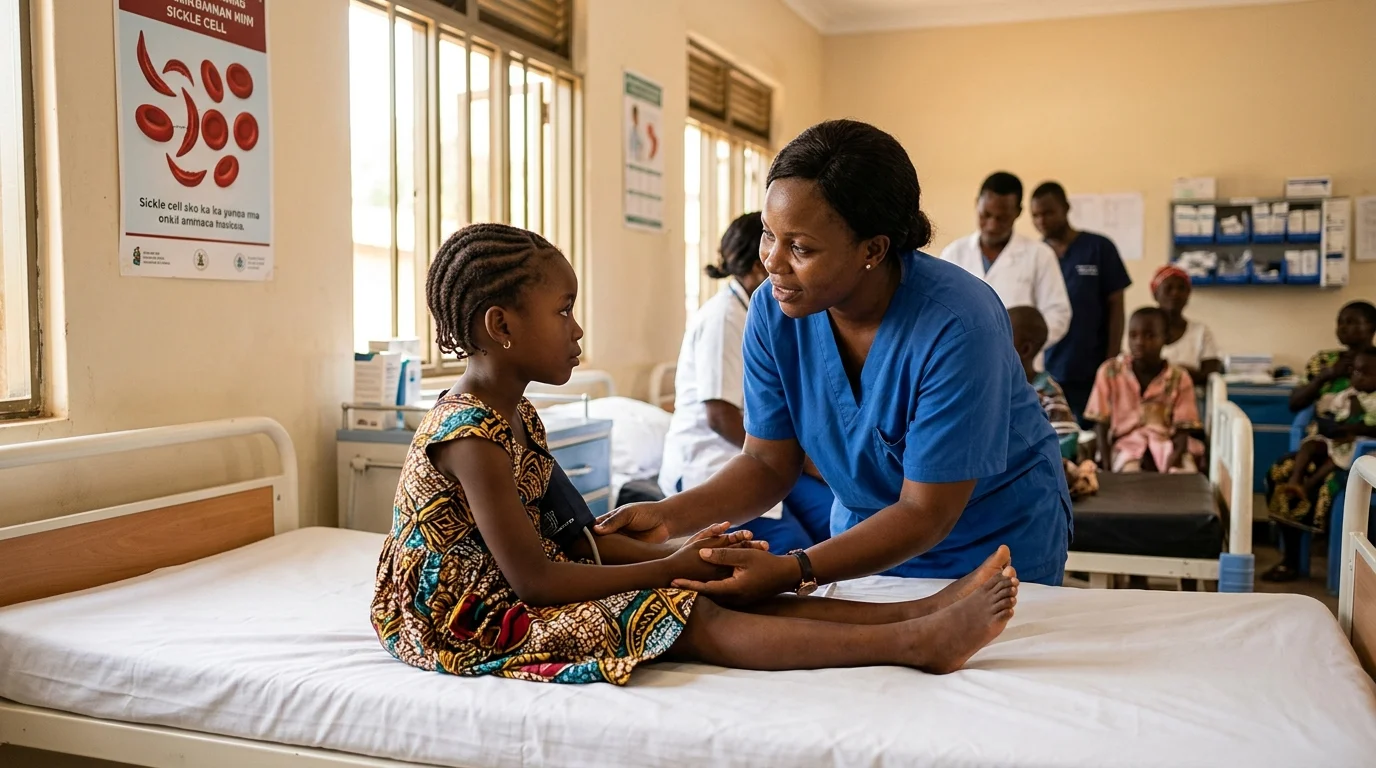
Nurses are often the frontline in sickle cell disease care, and their role goes well beyond administering medication. Day to day, nursing management includes:
- Regularly checking vital signs and oxygen levels to catch early signs of deterioration
- Assessing pain severity and location, administering analgesics, and tracking the patient’s response
- Watching closely for signs of infection and giving antimicrobial treatment when needed
- Monitoring for red-flag complications such as acute chest syndrome or stroke
- Managing hydration according to each patient’s clinical needs
- Educating patients and families on medication adherence, infection prevention, and warning signs that require urgent attention
𝗡𝘂𝗿𝘀𝗶𝗻𝗴 𝗠𝗮𝗻𝗮𝗴𝗲𝗺𝗲𝗻𝘁 of Sickle Cell Disease
Nurses play an important role in the management of sickle cell disease.
They monitor the patient, manage their symptoms and recognize complications early. They regularly assess vital signs, oxygen saturation and the patient’s general condition to help identify deterioration that requires prompt medical attention.[3,4]
Pain assessment is an important part of nursing care. Nurses should assess the severity and location of pain, administer prescribed analgesics appropriately and reassess the patient’s response to treatment.[3]
They are also responsible for monitoring patients for signs of infection and administering prescribed antimicrobial treatment when indicated. They observe for serious complications such as acute chest syndrome and stroke and promptly report concerning findings.[3,4]
They monitor the hydration status and provide fluids according to the patient’s clinical needs and prescribed treatment.[3]
Patient and family education is also important. Nurses can teach patients about medication adherence, infection prevention, adequate hydration, routine follow-up and warning signs that require urgent medical attention.[3,4]
READ ALSO: Overview of Nursing Documentation Practice for Blood Transfusion and Blood Reaction
𝗠𝗲𝗱𝗶𝗰𝗮𝗹 𝗠𝗮𝗻𝗮𝗴𝗲𝗺𝗲𝗻𝘁 of Sickle Cell Disease
Pain management: Pain during crises may be treated with appropriate medications such as paracetamol (acetaminophen) for mild pain and stronger ones, including opioids, when clinically indicated for more severe pain.[3,5]
Hydroxyurea: A medication used to reduce the frequency of pain crises and the need for blood transfusions by increasing fetal hemoglobin production, which helps reduce sickling.[3,4]
Blood transfusion: May be used in severe cases like anaemia, stroke and certain other serious complications. Transfusion increases the proportion of normal red blood cells in circulation and can improve oxygen delivery.[3,4]
Bone marrow transplant: Can potentially cure SCD in selected patients, particularly those with severe disease by replacing the defective bone marrow with a healthy one.[4]
Gene therapy: Emerging treatments aim to modify or replace the genetic problem responsible for SCD.[1,4]
𝗪𝗛𝗢 𝗥𝗲𝗰𝗼𝗺𝗺𝗲𝗻𝗱𝗮𝘁𝗶𝗼𝗻
The World Health Organization (WHO) recommends a comprehensive approach to sickle cell disease management, with emphasis on early diagnosis, prevention of complications and access to appropriate treatment.[1,2]
In Africa, WHO has developed specific guidance to help countries improve the quality and accessibility of SCD care.[2]
Early identification of SCD is important because treatment can begin before serious complications develop. WHO’s recent guidance for children and adolescents recommends early diagnosis and includes infection prevention, hydroxyurea therapy, pain management, stroke prevention and screening for complications among the key areas of care.[6]
WHO also recommends preventive measures such as appropriate vaccination, infection prevention and regular medical follow-up. Access to disease-modifying treatment such as hydroxyurea is an important part of comprehensive care.[6]
WHO also emphasizes improving access to essential medicines and integrating SCD services into primary healthcare systems, particularly in settings where the burden of the disease is high.[2,6]
For Africa, WHO’s guidance also emphasizes strengthening healthcare systems, training healthcare workers, educating patients and communities, and improving access to diagnosis and treatment. These measures are important for reducing preventable deaths and improving the quality of life of people living with SCD.[2,6]
Preventing Infections: Practical Steps That Save Lives
People living with sickle cell disease are more likely to develop serious infections, especially when the spleen is not functioning properly. Taking simple steps to prevent infections can therefore help reduce the risk of complications.[1,6]
Good hand hygiene is important. Patients should wash their hands regularly, particularly before eating and after using the toilet. Food should also be properly cooked, and drinking water should come from a safe source to reduce the risk of infections.[6]
Vaccination is another important part of prevention. People with SCD should keep up with the vaccines recommended by their healthcare provider, as some infections can be particularly dangerous for them.[1,6]
Patients and their families should also know the warning signs of infection. Fever should not be ignored, especially in a person with SCD. They should seek medical attention promptly if they develop a fever or other signs of infection.[6]
In areas where infections such as malaria are common, appropriate malaria prevention should also be part of routine care.[1,6]
𝗣𝗮𝘁𝗶𝗲𝗻𝘁 and Family 𝗘𝗱𝘂𝗰𝗮𝘁𝗶𝗼𝗻
People living with sickle cell disease and their families need to understand the condition and how to manage it on a day-to-day basis. Patients should be encouraged to take their prescribed medications correctly and attend regular medical appointments, even when they feel well.[1,6]
Patients should also learn to recognize factors that may trigger symptoms, such as dehydration, extreme temperatures and excessive physical exertion. Maintaining adequate fluid intake and following a healthy, balanced diet can support overall health.[3,6]
It is important to teach patients and caregivers to recognize warning signs that require prompt medical attention. Fever, difficulty breathing, chest pain, severe or unusual pain, weakness on one side of the body, confusion or sudden changes in vision should not be ignored. These may indicate serious complications and require urgent assessment.[1,6]
Families should also understand the importance of vaccination and infection prevention. Parents and caregivers of children with SCD should keep up with recommended healthcare visits and follow the treatment plan provided by their healthcare team.[6]
Good patient education can help people with SCD recognize problems early, make informed decisions about their health and reduce preventable complications.[6]
C𝗼𝗻𝗰𝗹𝘂𝘀𝗶𝗼𝗻
Sickle cell disease is a lifelong inherited condition that can affect different parts of the body and lead to serious complications. Its burden is particularly high in sub-Saharan Africa, making early diagnosis, proper treatment and access to quality healthcare especially important. [1,2]
With appropriate medical and nursing management, infection prevention, regular follow-up and proper patient education, many complications can be prevented or managed effectively.
Improving awareness among patients, families and communities, while strengthening healthcare systems and access to treatment, can help improve the quality of life of people living with SCD. [2,6]
Frequently Asked Questions
1. Can sickle cell disease be cured? Bone marrow transplant can potentially cure sickle cell disease in selected patients, and gene therapy is an emerging option. For most patients, treatment focuses on managing symptoms and preventing complications.
2. Why is sickle cell disease more common in Africa? Sickle cell trait offers some protection against severe malaria, which historically made the gene more prevalent in malaria-endemic regions, including much of sub-Saharan Africa.
3. What triggers a sickle cell pain crisis? Common triggers include dehydration, extreme temperatures, infection, and excessive physical exertion.
4. At what age do symptoms of sickle cell disease usually appear? Symptoms often begin within the first year of life, commonly around five to six months of age.
5. What role do nurses play in sickle cell disease care? Nurses monitor vital signs, manage pain, watch for complications like infection or acute chest syndrome, support hydration needs, and educate patients and families on long-term self-care.
𝗥𝗲𝗳𝗲𝗿𝗲𝗻𝗰𝗲𝘀
- 𝗪𝗼𝗿𝗹𝗱 𝗛𝗲𝗮𝗹𝘁𝗵 𝗢𝗿𝗴𝗮𝗻𝗶𝘇𝗮𝘁𝗶𝗼𝗻 (𝗪𝗛𝗢). S𝘪𝘤𝘬𝘭𝘦 𝘤𝘦𝘭𝘭 𝘥𝘪𝘴𝘦𝘢𝘴𝘦. 2025 https://www.who.int/news-room/fact-sheets/detail/sickle-cell-disease
- 𝗪𝗼𝗿𝗹𝗱 𝗛𝗲𝗮𝗹𝘁𝗵 𝗢𝗿𝗴𝗮𝗻𝗶𝘇𝗮𝘁𝗶𝗼𝗻 𝗥𝗲𝗴𝗶𝗼𝗻𝗮𝗹 𝗢𝗳𝗳𝗶𝗰𝗲 𝗳𝗼𝗿 𝗔𝗳𝗿𝗶𝗰𝗮 (𝗪𝗛𝗢 𝗔F𝗥𝗢). S𝘪𝘤𝘬𝘭𝘦 𝘤𝘦𝘭𝘭 𝘥𝘪𝘴𝘦𝘢𝘴𝘦. WHO Regional Office for Africa.
https://www.nhlbi.nih.gov/resources/evidence-based-management-sickle-cell-disease-expert-pa nel-report-2014
- 𝗡𝗮𝘁𝗶𝗼𝗻𝗮𝗹 𝗛𝗲𝗮𝗿𝘁, 𝗟𝘂𝗻𝗴, 𝗮𝗻𝗱 𝗕𝗹𝗼𝗼𝗱 𝗜𝗻𝘀𝘁𝗶𝘁𝘂𝘁𝗲 (𝗡𝗛𝗟𝗕𝗜). E𝘷𝘪𝘥𝘦𝘯𝘤𝘦-𝘉𝘢𝘴𝘦𝘥 𝘔𝘢𝘯𝘢𝘨𝘦𝘮𝘦𝘯𝘵 𝘰𝘧 S𝘪𝘤𝘬𝘭𝘦 𝘊𝘦𝘭𝘭
𝘋𝘪𝘴𝘦𝘢𝘴𝘦: E𝘹𝘱𝘦𝘳𝘵 𝘗𝘢𝘯𝘦𝘭 𝘙𝘦𝘱𝘰𝘳𝘵, 2014. 2014.
https://www.nhlbi.nih.gov/resources/evidence-based-management-sickle-cell-disease-expert-pa nel-report-2014
- 𝗡𝗮𝘁𝗶𝗼𝗻𝗮𝗹 𝗛𝗲𝗮𝗿𝘁, 𝗟𝘂𝗻𝗴, 𝗮𝗻𝗱 𝗕𝗹𝗼𝗼𝗱 𝗜𝗻𝘀𝘁𝗶𝘁𝘂𝘁𝗲 (𝗡𝗛𝗟𝗕𝗜). S𝘪𝘤𝘬𝘭𝘦 𝘤𝘦𝘭𝘭 𝘥𝘪𝘴𝘦𝘢𝘴𝘦. 2025. https://www.nhlbi.nih.gov/health/sickle-cell-disease
- 𝗕𝗿𝗮𝗻𝗱𝗼𝘄 𝗔𝗠, C𝗮𝗿𝗿𝗼𝗹𝗹 C𝗣, C𝗿𝗲𝗮𝗿𝘆 𝗦, 𝗲𝘁 𝗮𝗹. American Society of Hematology 2020 guidelines for sickle cell disease: management of acute and chronic pain. 𝘉𝘭𝘰𝘰𝘥 𝘈𝘥𝘷𝘢𝘯𝘤𝘦𝘴
2020;4(12):2656–2701.
https://ashpublications.org/bloodadvances/article/4/12/2656/455116/American-Society-of-Hemat ology-2020-guidelines-for
- 𝗪𝗼𝗿𝗹𝗱 𝗛𝗲𝗮𝗹𝘁𝗵 𝗢𝗿𝗴𝗮𝗻𝗶𝘇𝗮𝘁𝗶𝗼𝗻 (𝗪𝗛𝗢) 𝘞𝘏𝘖 𝘤𝘰𝘯𝘴𝘰𝘭𝘪𝘥𝘢𝘵𝘦𝘥 𝘨𝘶𝘪𝘥𝘦𝘭𝘪𝘯𝘦𝘴 𝘧𝘰𝘳 𝘵𝘩𝘦 𝘮𝘢𝘯𝘢𝘨𝘦𝘮𝘦𝘯𝘵 𝘰𝘧 𝘤𝘰𝘮𝘮𝘰𝘯
𝘤𝘩𝘪𝘭𝘥𝘩𝘰𝘰𝘥 𝘪𝘭𝘭𝘯𝘦𝘴𝘴: 𝘮𝘢𝘯𝘢𝘨𝘦𝘮𝘦𝘯𝘵 𝘰𝘧 𝘴𝘪𝘤𝘬𝘭𝘦-𝘤𝘦𝘭𝘭 𝘥𝘪𝘴𝘦𝘢𝘴𝘦 𝘪𝘯 𝘤𝘩𝘪𝘭𝘥𝘳𝘦𝘯 𝘢𝘯𝘥 𝘢𝘥𝘰𝘭𝘦𝘴𝘤𝘦𝘯𝘵𝘴. 2026.


